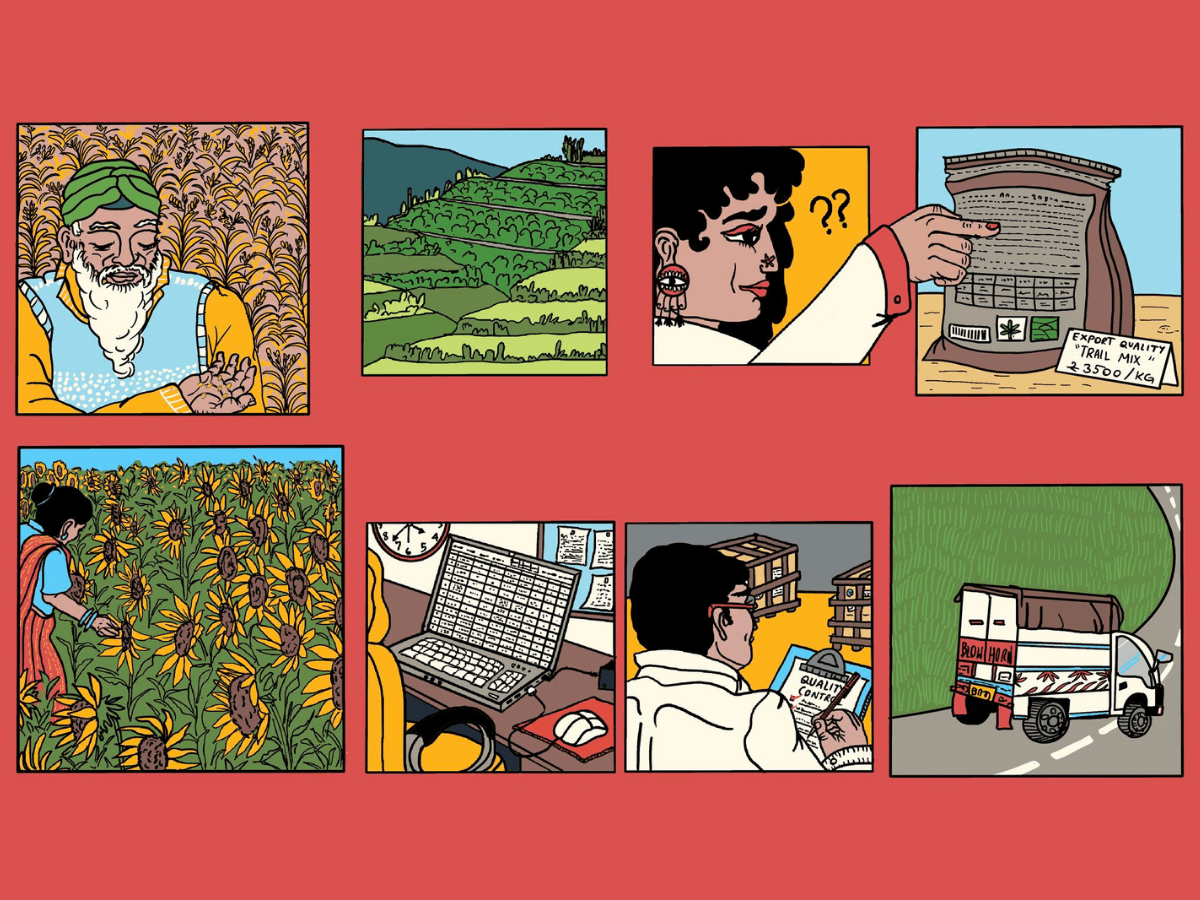
Written for the Good Food Movement as part of my monthly column ‘The Plate and the Planet’. Published in December 2025. Header image credit: Alia Sinha for the Good Food Movement.
As consumers, do we have the right to know more about where our food comes from? With food borne illnesses and lifestyle disease statistics making headlines frequently, this is a fair question, but also one that is difficult to answer. Modern supply chains are vast, and even seemingly single-ingredient foods often come from multiple sources. Tea may be blended from several estates, coffee from different regions and honey from hundreds of small apiaries. For foods with many ingredients, tracing each component is even more challenging.
For consumers, this information is not always useful. What most people need is reassurance that the food they buy is safe and stands up to the various claims made on its packaging. For businesses and public authorities, however, knowing where each ingredient comes from is essential. When contamination or adulteration occurs, they must be able to identify where the problem began and act quickly to remove affected products. A reliable traceability system is therefore less about telling consumers every detail of origin, and more about ensuring that producers and regulators can track the chain of responsibility when needed.

 Madhura Rao