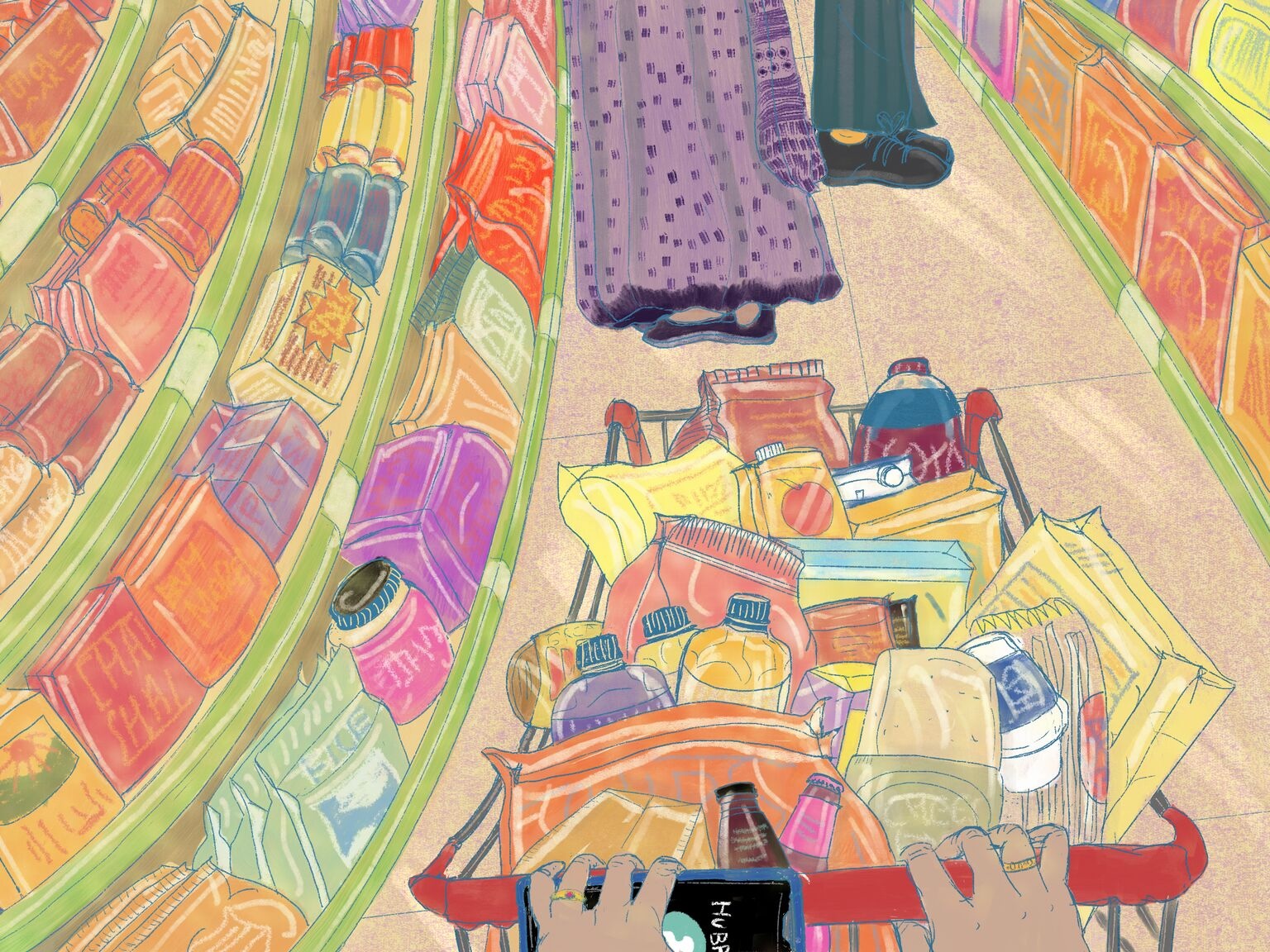
Written for the Good Food Movement as part of my monthly column ‘The Plate and the Planet’. Published in September 2025. Header image credit: Alia Sinha for the Good Food Movement.
Walk into any grocery store today, and you’re likely to find shelves stacked with shiny packets, instant mixes, and colourful snacks that promise taste, speed, and convenience. From breakfast cereals to frozen parathas, ultra-processed foods (UPFs) have become a staple of modern life, especially in urban India. But behind the vibrant packaging and clever marketing lies a more complex story about convenience and its consequences: what exactly are these foods, how did they become so ubiquitous, and what are the effects of their growing presence in our diets?
Peeling back the many layers of processing
The term ‘ultra-processed food’ was introduced in 2009 by Brazilian nutrition researcher Carlos Monteiro, who also developed the NOVA classification system. Now widely used in global debates on food and health, this system groups foods into four categories based on the extent to which they have been processed.

 Madhura Rao