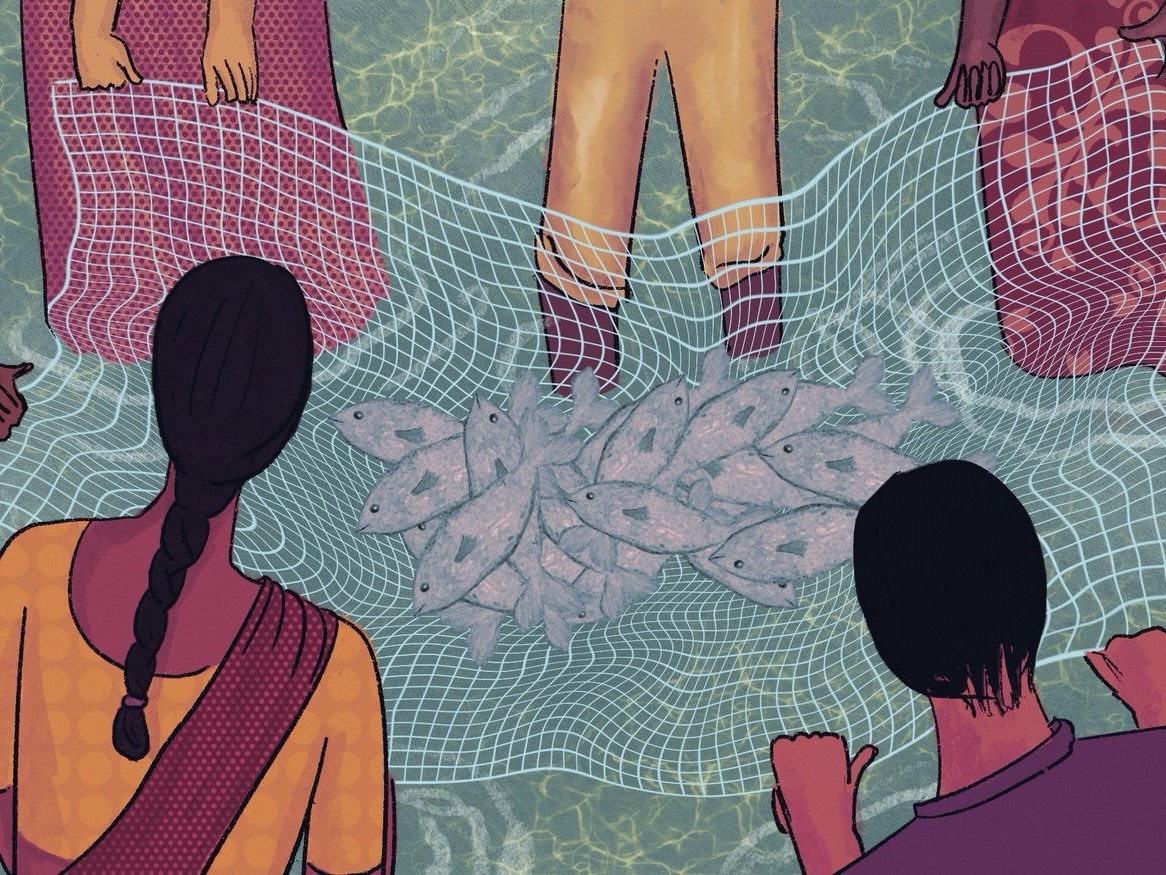
Written for the Good Food Movement as part of my monthly column ‘The Plate and the Planet’. Published in May 2025. Header image credit: Good Food Movement.
Can a rapidly expanding industry feed a nation without compromising its ecosystems or its people’s health? Aquaculture—which involves farming fish, shellfish, and aquatic plants—has become central to this question, especially in countries like India where fish is both a dietary staple and an important source of livelihood. Unlike capture fisheries, which rely on harvesting wild fish, aquaculture is a controlled process that allows for increased production and a steady supply of seafood.
Although aquaculture has existed for centuries, it is now gaining greater attention and benefiting from technological advancements due to declining wild fish stocks, growing concerns over food security, and the need for a more sustainable way to meet rising seafood demand. Over the last few decades, it has emerged as one of the fastest-growing sectors of the food industry, playing a key role in global food and nutritional security. For countries like India, where fish is a staple for millions, aquaculture holds immense economic, dietary, and employment potential.

 Madhura Rao