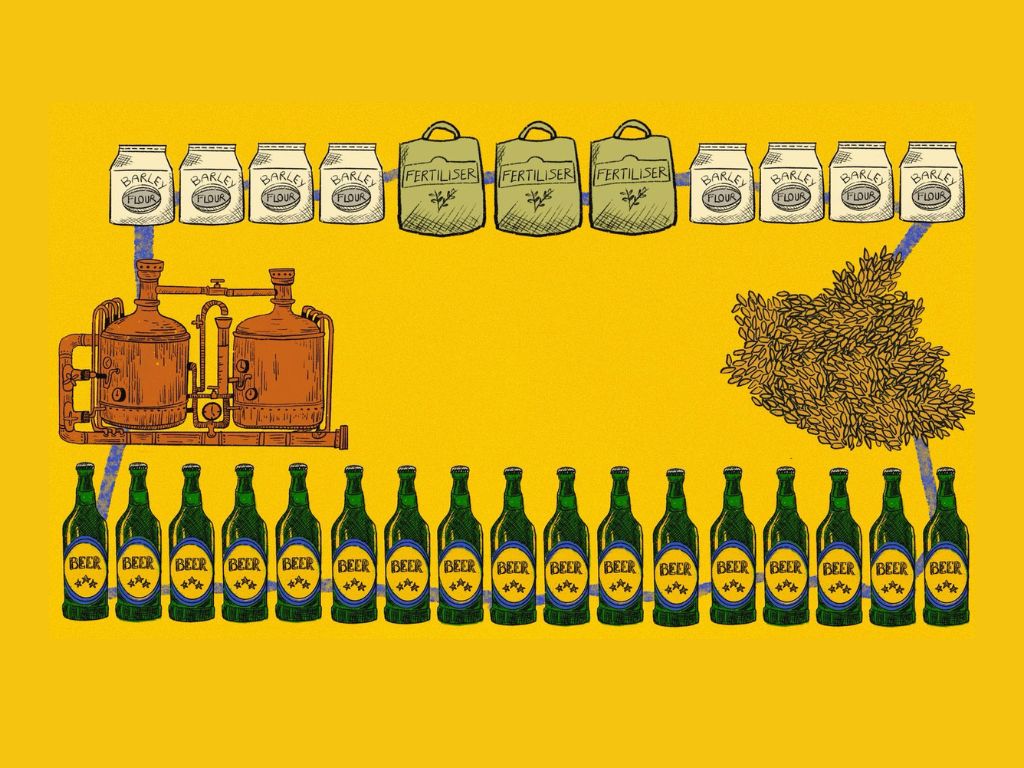
Written for the Good Food Movement as part of my monthly column ‘The Plate and the Planet’. Published in April 2025. Header image credit: Good Food Movement.
India – one of the world’s largest food producers – loses an estimated 40 percent of its produce annually. This colossal waste not only squanders natural, technological, and human resources, but also costs the economy an estimated Rs 926.51 billion every year, adding to its existing strain. Unlike in developed countries, where the majority of food waste comes from consumers’ homes and supermarkets, food waste (or more accurately, food loss) in India primarily occurs before food reaches retailers or consumers. This is largely due to inefficiencies in post-harvest storage, transportation, and distribution. A lack of proper cold chain infrastructure leads to spoilage, especially for perishable items like fruits, vegetables, dairy, and meat. Inadequate warehousing and poor handling practices result in grain losses, and market oversupply causes vendors to discard large quantities of food.

 Madhura Rao