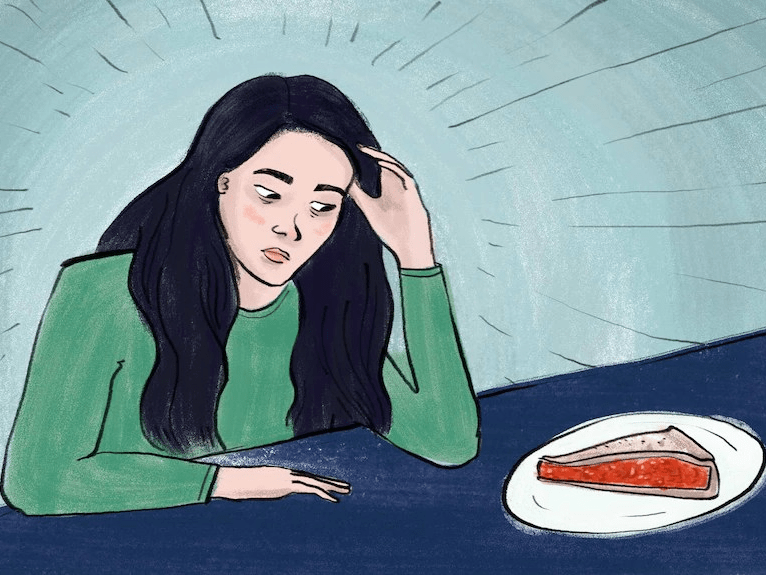
Written for the blog of the American Anthropological Association’s Committee for the Anthropology of Science, Technology, and Computing (CASTAC). Originally published on blog.castac.org in November 2023. Header image credit: Humyara Mahbub for ABC Everyday.
Content and Trigger Warning: This post contains commentary and reflections about disordered eating.
Food(ie) Fixation
In September 2019, I responded to an advertisement by a Dutch university for a PhD student interested in the policy and societal aspects of food waste valorisation. With a strong interest in sustainable food systems and an academic background in food supply chains and regulatory affairs, I seemed to fit the bill. I had not studied food waste before, but I felt a strong moral connection to the subject and the idea of investigating ways to better utilise food waste as a resource appealed to me. Following a successful interview, I was appointed to work on the project for a period of four years.
In the months that followed, I dove head-first into literature on food waste. I learned that one third of all food produced on the planet ends up as waste while one in three people go to bed hungry. I also learned that the environmental consequences of food waste are dire: distending landfills, collapsing ecosystems, depleting natural resources, among others. The seriousness of the issue stunned me, and I often found myself thinking about food waste in a personal context next to an academic one.
Mission Zero Food Waste
I have always been a careful grocery shopper, a thrifty cook, and a conscientious eater. I rarely bin food, cooked or otherwise. I attribute this to growing up with my mother’s strict ‘no food waste’ policy and my cultural background wherein wasting food borders sacrilege. Although living in the Netherlands put some distance between me and these cultural and familial contexts, I seemed to unwittingly hold on to them. Despite this, all the literature I was reading made me wonder if I was doing enough as a consumer. Knowing more made me want to do more. It made me want to make stock from vegetable scraps, smoothies from fruit pulp, and compost from compostable stuff. It also made me consider lifestyle changes such as actively planning my meals around wilting produce, purchasing about-to-expire food products when it’s possible to eat them in time, and implementing a first-in-first-out system in my pantry. And so, I set off on mission zero food waste: a fun personal project with a side of socio-environmental benefits.
Of course, I knew that this would be a drop in a vast ocean and that the problem of food waste stemmed from complex systemic issues that cannot be solved through consumer resolve alone. But there was surely no harm in trying to be a more responsible consumer and ‘walking the talk’ as I worked towards my doctorate.

 Madhura Rao